Consumer Mindset · Old School Skills

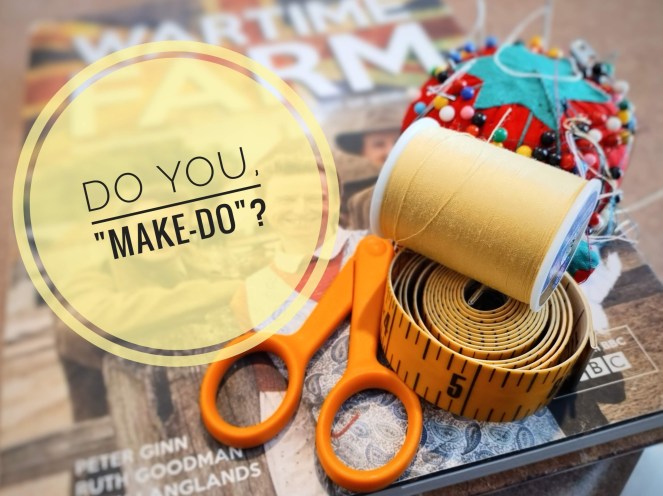
Are You “Making-Do”? – The Wartime Farm – BBC 2012

For the second time in several years, I’m re-watching the Wartime Farm, a BBC production from 2012. It follows the adventures of a team of three: historian Ruth Goodman, and archeologists Peter Ginn and Alex Langlands, as they recreate the conditions of a farm during World War Two, 1939-1945, in Britain. It is filmed on the beautiful Manor Farm, an historical park that has preserved much of late 1930s and early 40s living space and agriculture.  
I’m always drawn to these historical recreations. A genre that became popular back in the late 1990s with the Victorian House and the 1940s House (my favorite), among other historical, time-travel “reality” shows. Though in some productions the internal drama of the participants predominated, the Wartime Farm definitely does not do so (and neither did the 1940s House for that matter, much to the credit of those participating).

Tough times can produce sterling qualities

My own college research was in the WW2 era, and I have been and remain fascinated with that time when so much was on the line. We live in a similar period, though cocooned in our material plenty, we often do not recognize that fact. My own grandparents spent their teen and young adult years navigating the Great Depression and the Second World War. It left an indelible impression on their lives and lifestyles. My maternal grandparents had a Victory-style garden nearly their whole lives, though, to be fair, they had grown up the children of homesteaders, so their subsistence lifestyle predates the 30s and 40s.

There was a great pulling-together and spirit of self-sacrifice, which ultimately showed many people that they were made of tougher stuff than they had assumed. There was strength in shared purpose, and the dangers of invasion and occupation brought on a sobriety that had been lost in the excesses of the 1920s.

Aside from the greater moral lessons of the war, what I really found practical from a Prudent Consumer perspective, is the concept of “making-do” that predominated WW2 government and popular, practical literature, and a principle featured in the Wartime Farm series. This was especially so for Britain, where, as an island, they were subject to greater privations than in the U.S. Making do with what you had before the war had to carry you through to the end of it (whenever that was), or until intrepid merchant boats could get through the German blockade at sea.

Old lessons, new applications

We’re feeling a bit of this now in the U.S., with increased interest rates and the need for new trade negotiations. A dynamic that is always rough seas at first until fruitful negotiations produce a fair reciprocity in international trade. Could we end up without the flow of endless material goods from China? Or at least a slower flow? Might we have to wait on U.S. production to ramp up and then pay a bit more for, one hopes, better quality? Possibly.

In either case, the premise of “make-do and mend” or “use what you have and repair items that you might otherwise have thrown out” were hallmarks of both the Great Depression and WW2. They served people well then, and can do so now.

Three takeaway principles

A framework for applying a “make-do and mend” mentality:

  1. Think before you spend. Ask the simple question: do I already have something that will serve the same purpose as the item I want to buy? If I do, and it needs a bit of mending or repair, can I accomplish that? If not, do I know someone who can? Can I learn the repair skill from YouTube or another person?
  2. Singularize, don’t duplicate. If you have an item in one color (aside from t-shirts), do you need the same thing in five tonally harmonizing hues? No, buy the neutral one first and it will match with more things.
  3. Learn the difference between “wants” and “needs.” You might also hear these referred to as “extras” and “basics.” You can get by on basics, groceries or otherwise, but you will become wasteful if you always purchase extras. You’ll also accrue debt.

I’m sure you can think of many other applications of “make-do and mend,” and it’s a great mental exercise to practice.

And remember, it can also apply to technology! If you’re feeling overwhelmed by the constant barrage of social media, you can “make-do” with less by cutting back on the sites and apps you participate in. Delete all but the most “basic” apps from your phone screen and notice how much less you feel tied to your device.

Let me know of any additional “make-do” ideas you’ve developed in the comments section!

Sources:

Wartime Farm: Rediscovering the Skills and Spirit of World War II, Peter Ginn, Ruth Goodman, Alex Langlands, Mitchell Beazley publishers, 2012.

Wartime Farm is presently streaming for free on Tubi, as of February 2025.
    Old School Skills

    Wise Sayings: Gardening Advice

    (Amazon affiliate link at the end.)

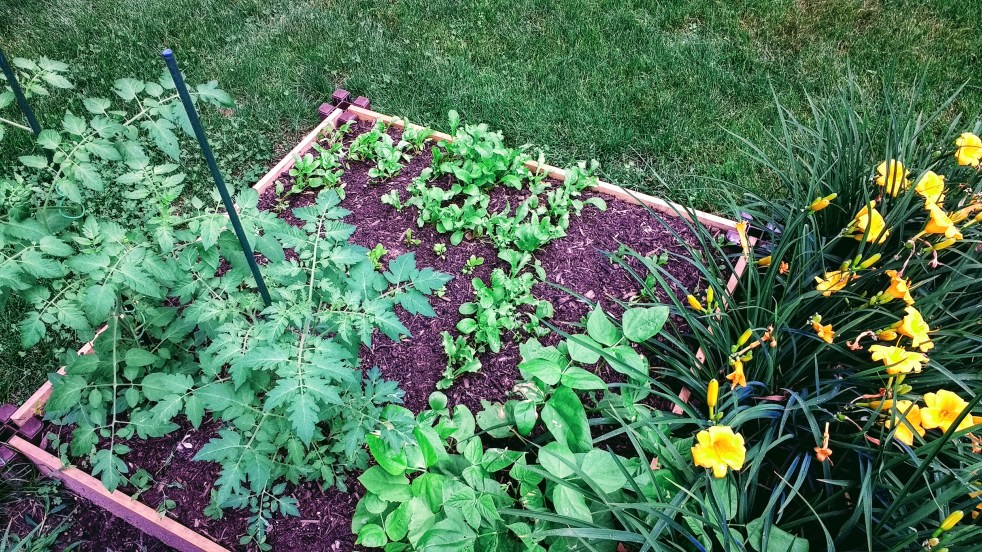
    It’s that time of year again. The snow is melting (well, not where I live) and the days are getting longer. The buds on the trees are starting to swell in anticipation of warmer temperatures. Birds are out and about and our minds, for us gardening types, turn to seed catalogs and what to plant, when and where.

    And so, it seems now would be a good time to explore some wise gardening sayings. Along with trowel, hod, and spade, a few handy, old-timey wise sayings can offer some surprisingly useful advice.

    #1 : “In October manure your field, and your land it’s wealth shall yield.”

    This piece of advice is an accurate one. A good dose of manure needs time to break down and the winter rest gives it plenty of time. This is especially true as I learned once when we came by some free horse manure and tried to use it right away. It was so hot and acidic that it killed many of our plants that year. That taught me!

    Another type of manure, apart from animal waste and kitchen waste, are green cover crops that you can plant, and which grow a little in late winter and then in the early spring can be turned over into the soil to incorporate the nutrients as it breaks down. This is an approach to manuring that is being applied at the large-scale farming level with great success in restoring the health of soils that have been overused and overdosed with chemical fertilizers, pesticides and herbicides.

    #2 : “Water plants well or not at all.”

    You would think that any water is better than no water, so when I read the explanation of this particular adage in my book on wise sayings (see below) it finally clicked as to why my dad always told me to “give the garden a good soaking”. If you only water a little, then the surface moisture will cause the plants to develop shallow roots. A good hearty soaking gets the moisture down into the soil and the plants will reach downward to develop a stronger root network.

    #3 : “Plant pears for your heirs.”

    Some fruiting plants can produce in three or four years, but others take a longer time. This is true for pear trees. And it gives food for thought, planting a garden or an orchard teaches us that immediate gratification is not the way of the Creation. There is great wisdom in patience and learning to commit to the long-term rather than get a quick return in the short-term (the financial sector could use this lesson).

    It also teaches altruism. If you plant a pear tree you are doing the work of watering, feeding and protecting a plant that probably will not provide you with much during your lifetime, but it will provide for those who come after. It is a selfless act and one that teaches us that sometimes you put in all the work and toil and sacrifice and you never reap a reward in this life. Life is more meaningful if we take that lesson to heart.

    So there are three interesting wise sayings to chew on, and tuck in your mental gardening shed for later use.

    What other wise sayings or maxims have you heard through the years that have helped you in your gardening adventures? Please share in the comments below here on the blog, or on Facebook.

    Sources: Wise Words and Country Ways: Traditional Advice and Whether It Works Today by Ruth Binney, 2004 (If you would like your own copy, please consider using the following link to purchase. I receive a small commission from Amazon of any purchases through this link: https://amzn.to/3JD4tFY)

    Old School Skills

    Wielding A Wise Saying: Breaking Eggs!

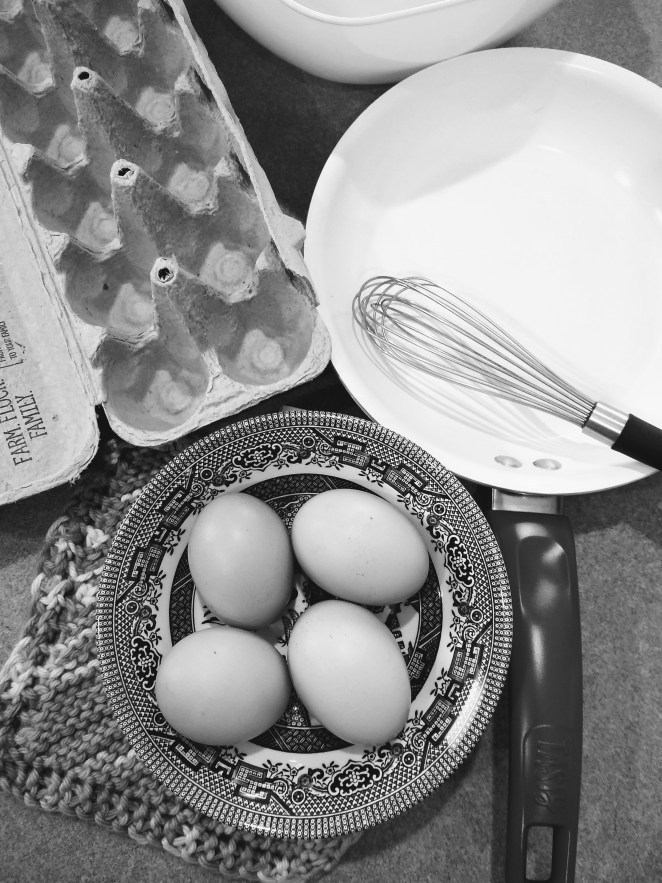
    “You can’t make an omelet without breaking a few eggs!”

    Photo: Amanda Stiver

    In our current economic climate, and considering the price of eggs right now, the above saying might seem like heresy, but it’s still true!

    I don’t know about you, but I love old sayings like these. They used to be the pepper and spice of everyday speech, but because of the over-saturation of social media, and the ever increasing gap in numbers between those who live an agrarian based lifestyle and those who don’t, we’ve lost many of them.

    I’ve heard it argued that such sayings are trite and common, hopelessly outdated, repetitive, and (greatest of all insults) “not authentic.” Of course, this advice came from the same individuals, some of my college professors, who perpetuated the lofty sounding phrases of “academese” at length and often. A case of “people in glass houses who aught not throw stones,” to coin a phrase.

    Both my maternal and paternal grandparents were fonts of pithy sayings like these. “Many hands make light work” and “for every old sock there’s an old shoe” being two that were oft-repeated. Each of these useful nuggets encapsulated a practical or eternal truth. And, with semi-poetic phrasing, they caught themselves in the memory and surfaced when needed.

    The book of Proverbs in the Bible is a tremendous repository of such wise sayings (though of more spiritual value and emphasis), and other cultures feature proverbs and sayings as well. Proverbial sayings have carried-over from times when oral cultures were the norm, books being costly and few and far between, but they are also a convenient “life-hack.” With a cheerful dose of humor, they can help put things in perspective when we are tempted to succumb to the over-dramatic and lose all sense of proportion.

    And that gets us back to “You can’t make an omelet without breaking a few eggs.” This great saying means that (despite the ridiculously high cost of eggs) in order to do something right, there will probably be some mess, and stress, and some collateral damage, but in the end, that trail of dust or clippings or drippings means that something productive has been achieved. Maybe even something delicious!

    It can also mean that a little outlay (often money) is required if you want to get something important done. Think a nest egg that allows you to fund a project that in turn might prove to be a source of income or of great help to others.

    We could go on, but you can see the wisdom all tied up in that tidy, but descriptive saying. You’ll never see an egg, or an omelet, again without thinking of this bit of instruction!

    What are some of your favorite “wise-sayings” or “things that grandma always said?” Let us know in the comments below, or in the comments section on Facebook when you see this post.

    Keep a shiny penny and a positive thought!

    Sources: “63 Sayings You Learned From Your Southern Grandma” by Southern Living editors, May 21, 2019. https://www.southernliving.com/culture/southern-grandma-sayings