Old School Skills

Wielding A Wise Saying: Breaking Eggs!

“You can’t make an omelet without breaking a few eggs!”
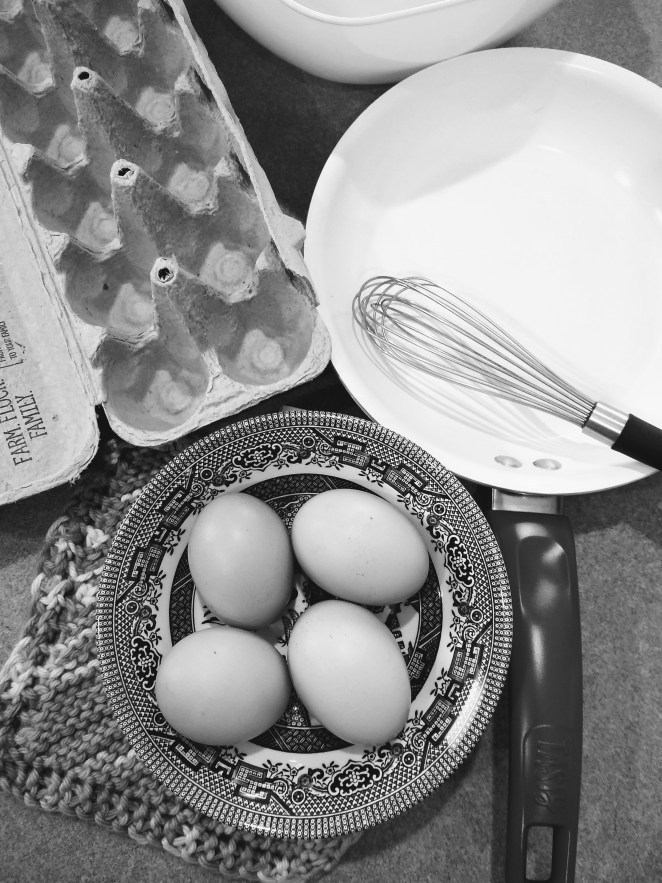
Photo: Amanda Stiver

In our current economic climate, and considering the price of eggs right now, the above saying might seem like heresy, but it’s still true!

I don’t know about you, but I love old sayings like these. They used to be the pepper and spice of everyday speech, but because of the over-saturation of social media, and the ever increasing gap in numbers between those who live an agrarian based lifestyle and those who don’t, we’ve lost many of them.

I’ve heard it argued that such sayings are trite and common, hopelessly outdated, repetitive, and (greatest of all insults) “not authentic.” Of course, this advice came from the same individuals, some of my college professors, who perpetuated the lofty sounding phrases of “academese” at length and often. A case of “people in glass houses who aught not throw stones,” to coin a phrase.

Both my maternal and paternal grandparents were fonts of pithy sayings like these. “Many hands make light work” and “for every old sock there’s an old shoe” being two that were oft-repeated. Each of these useful nuggets encapsulated a practical or eternal truth. And, with semi-poetic phrasing, they caught themselves in the memory and surfaced when needed.

The book of Proverbs in the Bible is a tremendous repository of such wise sayings (though of more spiritual value and emphasis), and other cultures feature proverbs and sayings as well. Proverbial sayings have carried-over from times when oral cultures were the norm, books being costly and few and far between, but they are also a convenient “life-hack.” With a cheerful dose of humor, they can help put things in perspective when we are tempted to succumb to the over-dramatic and lose all sense of proportion.

And that gets us back to “You can’t make an omelet without breaking a few eggs.” This great saying means that (despite the ridiculously high cost of eggs) in order to do something right, there will probably be some mess, and stress, and some collateral damage, but in the end, that trail of dust or clippings or drippings means that something productive has been achieved. Maybe even something delicious!

It can also mean that a little outlay (often money) is required if you want to get something important done. Think a nest egg that allows you to fund a project that in turn might prove to be a source of income or of great help to others.

We could go on, but you can see the wisdom all tied up in that tidy, but descriptive saying. You’ll never see an egg, or an omelet, again without thinking of this bit of instruction!

What are some of your favorite “wise-sayings” or “things that grandma always said?” Let us know in the comments below, or in the comments section on Facebook when you see this post.

Keep a shiny penny and a positive thought!

Sources: “63 Sayings You Learned From Your Southern Grandma” by Southern Living editors, May 21, 2019. https://www.southernliving.com/culture/southern-grandma-sayings
Quick Tips

Tip: The Proper Way To Fill A Pillowcase….Yes, Really!

Photo: Amanda Stiver

Have you ever noticed that over time, your nice, smooth 300-count sheet set pillowcases (or any pillowcase, for that matter) develop unsightly holes in the corners?

Is this a mysterious moth-like infestation of your house? Do pillowcase corners naturally dissolve over time? Is this an unsolved mystery?

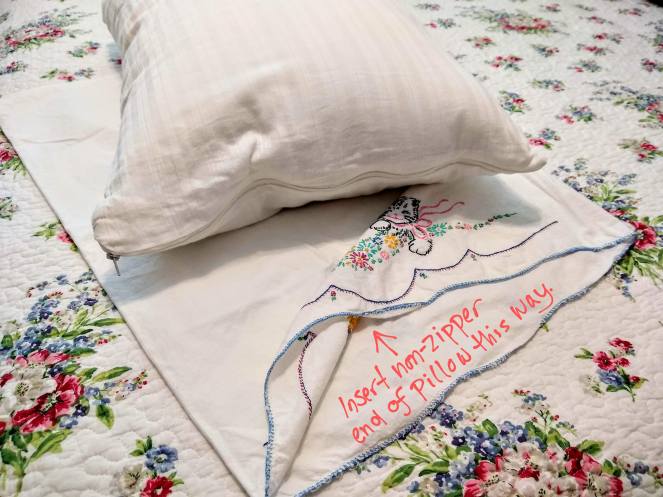
I think not. In fact, it is simply the unfortunate wear and tear that a zippered pillow cover inflicts on the closed-end of a pillowcase if you insert the pillow the wrong way.

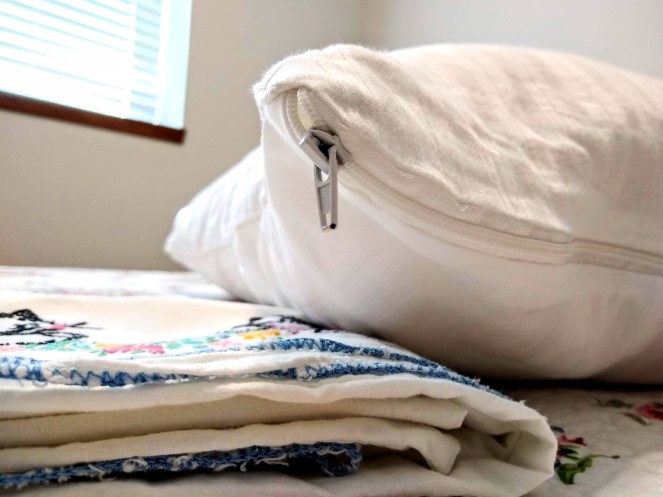
Before we get to the proper technique, let’s touch on pillow covers. They are thin cotton pillowcases with a zippered end instead of an open one and they fit snugly around your favorite bed pillow. Why? To protect the pillow from excess dirt and drool, but also, to allow you to wash the pillow cover rather than the pillow itself. A pillow washed too many times will lose its “fluff” and become a lumpy wad of filler that threatens to irritate and displace delicate neck vertebrae.

Photo: Amanda Stiver

Now, what about those zipper holes! I noticed this years ago when my favorite pillowcases suddenly sprouted unsightly, sad looking holes in the corners. I traced the mystery back to my habit of putting the pillow in, zippered-side down as I filled the pillowcase. The plastic and metal of the zipper on the pillow cover then rubbed against the fibers of the closed corners of the pillowcase with every toss and turn through the night, and over time wore them through.

Not a tragedy, but an annoyance, and one that is easily solved.

Photo: Amanda Stiver

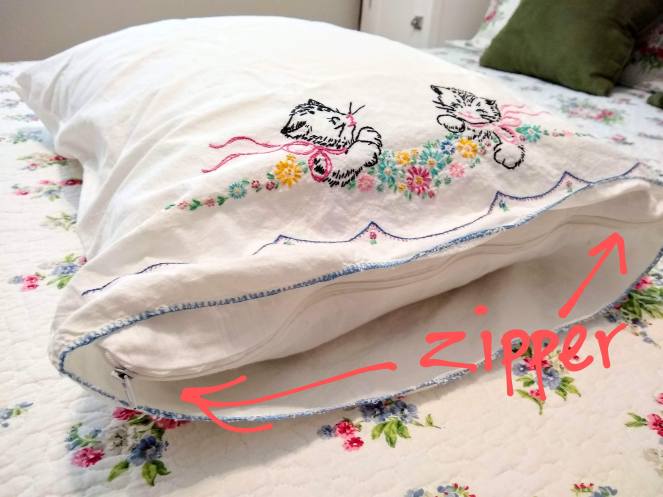
To keep those pillowcases looking as tidy and fresh as their first use, make sure that as you insert the pillow into the pillowcase the zippered end of the pillow cover projects out the open end of the pillowcase instead of the closed end.

A simple habit that can make your carefully purchased bed clothes last a little longer.

Keep a shiny penny and a positive thought!

Do Your Homework

Barometers: Getting To Know A Valuable Device

With the winter weather we’ve been experiencing here on the central plains, watching the change in atmospheric pressure is an interesting and practical hobby.

Photo: Amanda Stiver

I’ll admit, digital weather devices are as ubiquitous as the cell phone in your hand, and they are both useful and lifesaving.

Our personal experience was confirmation of this, when this last spring a derecho swept up from the south central plains at 100 mph, dragging a dust storm. A quick update on my smartphone alerted us to the severity of the storm and we were able to batten down the hatches and prevent more serious damage to life and limb.

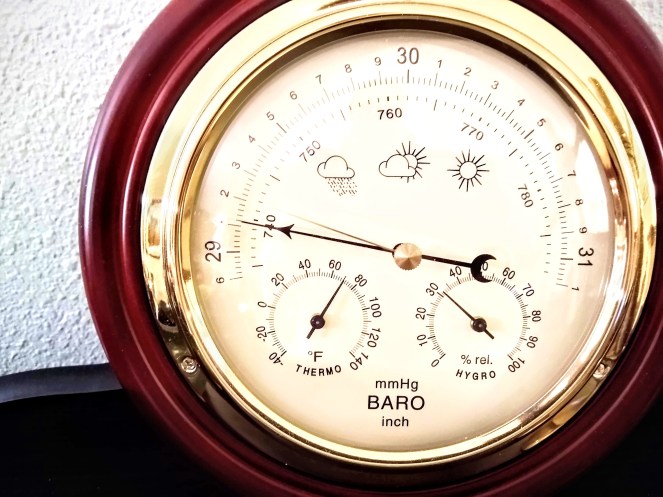
And yet, on our dining room wall is a small round instrument the size of a salad plate. It’s a good, old fashioned aneroid barometer. The mechanism is in a sealed box containing a highly sensitive metal spring that expands or contracts as the air pressure squeezes or releases the box. The spring is attached to a dial that moves on a calibrated scale and shows a numerical measurement of the pressure reading.

Low pressure usually presupposes a storm, while higher pressure typically indicates clear weather. To take a reading you gently tap the glass (to make sure the spring is moving freely), read the air pressure number, then you turn a small gold dial and arm, which protrudes from the center of the glass, parallel with the internal pressure dial. Finally, you wait for some hours and take a reading again. If the pressure has moved, the internal dial will move and the external arm will indicate the previous pressure and the direction of movement, higher or lower, clearer or stormier.

Fun, right? I think so.

Now the why. What does a barometer have to do with a prudent consumer?

Several things…

  • When the power goes out. Digital devices are a great first line of defense for weather news, but a good non-digital backup can give additional peace of mind and remind us not to take the power grid for granted.
  • Aesthetics. A quality nautical-style barometer looks handsome on the wall alongside a keepsake clock, or other similar arrangement. What do aesthetics have to do with being a prudent consumer? Our physical environment shapes us more than we may realize, and choosing beautiful and quality items to adorn your home environment (always according to sound budgeting) is a way to uplift our outlook. They add value to our surroundings and remind us not to get caught in the trap of buying cheap junk, which is not prudent, usually breaks quickly and requires spending more in the long run than what is saved in the short run (I should know, I’ve been caught there more times than I like to admit). Dignity is both internal and external, our home environment can become a visual expression of how we think about ourselves.
  • Skills. Taking readings from an aneroid barometer is a skill set, and skill sets give us flexibility when facing challenges. This particular skill, employing a device that uses a physical mechanism to measure an atmospheric condition, which can help us understand the weather outside is good for our minds. It keeps us in touch with reality. In a philosophical sort of way, anything that reorients us to physical things, such as the weather, helps us to counteract the emotionally invasive influence of the digital, mostly non-reality based onslaught of social media and news. In short, it puts your head in a better place, just as gardening and other outdoor pursuits can do. A barometer can be a small reminder of that outdoor connection during the cold winter months.

Plus, my grandma had one on her wall and my mom remembers the excitement she felt as her brother took pressure readings and they anticipated a coming storm, like the tremendous Columbus Day storm of 1962. Little things can sometimes be the most important things!

Keep a shiny penny and a positive thought!

[If you would like your own device, this is the one we bought on Amazon (as of this writing we’re not an affiliate): barometer. We’ve found it dependable, and durable compared to some we’ve had in the past, and it is a very fine-looking piece (as seen in the photo above) for a wall display. ]

Sources: “Barometers” by Chris Woodford, Jul., 3, 2022 https://www.explainthatstuff.com/barometers.html

Consumer Mindset

Oranges into Orangeade: Food Scarcity and the Weak US Citrus Crop

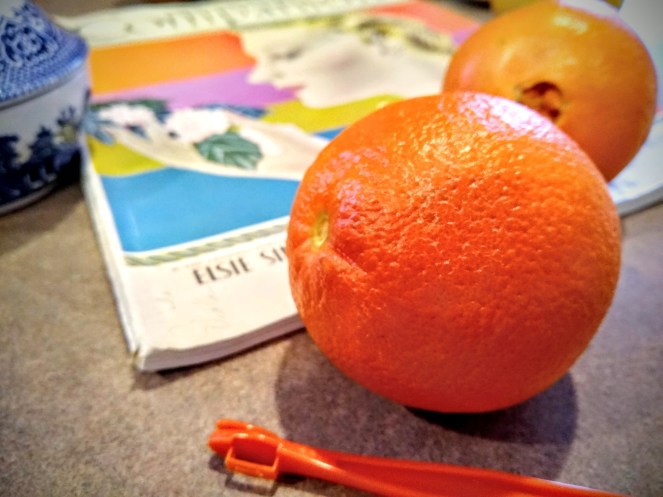
According to a news report on AgDay this morning, the Florida orange crop for the 2022/2023 year is expected to be right around 20 million boxes, that puts this year’s crop about 36% down compared to previous years due to significant hurricane damage. Which is just ahead of another very weak harvest from 85 years ago! The 1937/1938 harvest came in at a mere 19.1 million boxes.

Photo: Amanda Stiver

The report continued by highlighting that with such a hit to the orange crop consumers (that’s us folks) will feel it as a price increase, and additional imports will be required from outside the country to fulfill demand.

That is, and I editorialize here, assuming that crops in other parts of the world are plentiful. Using a worst-case-scenario, let’s touch on an important aspect of having a prudent consumer mindset.

In our hypothetical example of food scarcity, let’s say that oranges (and other citrus crops) aren’t readily available and when they are, they are extremely expensive. What to do? Do we melt into an orange-less sherbet puddle or a look forlornly at our empty glass of breakfast OJ?

No, we do not, because we have that marvelous flexible mindset that all prudent consumers possess. Let’s examine the steps in that process…

  • Step 1: View this scarcity as opportunity and activate creativity under duress!
  • Step 2:Tackle realities. If Oranges, or other citrus fruits, aren’t as readily available, how will that affect our nutrient intake? Specifically, Vitamin-C? What other foods can I find that will make up the difference?
    • Answer: There are many, but cabbage comes to mind. Increase your intake by adjusting your weekly menu accordingly and add more cabbage, brussels sprouts, or broccoli, knowing that to make use of water-soluble Vitamin-C a raw chopped salad or lightly cooked dish is best. This was a trick that the British were encouraged to make use of during the heavily rationed days of WW2, when imported citrus fruits were extremely scarce, often only available to families with children, and victory gardeners were producing plentiful supplies of cabbage in their own back yards.
  • Step 3: Be ingenious. Oranges, but more often lemons, are frequently used as an acid ingredient in recipes. What alternatives can I find that will supply the proper chemical reaction? Another trick from WW2 days, use vinegar (I prefer apple cider) and lemon flavoring for lemon bars, or salad dressings, or as an acid component in a recipe. Buttermilk would also work. Take time to experiment and educate your tastebuds to be adventurous!
  • Step 4: Be constructive with what you do have. Buy what you can afford! That may mean less orange juice or the need to ration oranges, lemons, or grapefruits, so use each individual fruit thoroughly. Enjoy every last bite of the juicy flesh and be sure to eat some of the pithy white stuff, it contains the bioflavonoid Rutin, which helps strengthen blood vessels. Don’t throw out that peel, though! If you need some air freshener, put it down your garbage disposal. Or, do like my great grandmother did and boil grapefruit peels to make quinine which was used to improve various health conditions and stimulate digestion. (If you go down that route, try to use organic produce washed thoroughly and find a reliable recipe, but do so at your own risk.) Also, grate citrus zest before eating the fruit and freeze it to use in recipes later. And that’s just a starter list!

Don’t let food scarcity, or the looming possibility of it, make you feel helpless. You are resourceful and can deal with every eventuality! Take a bit of time to think through each food group and how you could come up with alternatives and ways to stretch what you have.

Let’s pray that the orange supply rebounds and we don’t have to worry about squeezing every last drop of juice from the fruit! But if we must, we’ll know what to do!

Keep a shiny penny and a positive thought!

Sources:

AgDay broadcast for Dec., 13, 2022  https://www.youtube.com/watch?v=vjlM6BwcEXs&list=PLvTM5d7T5l6mwnYBebH2HtRiqlDjhprde

Preparedness

What to Do While Waiting for the Storm

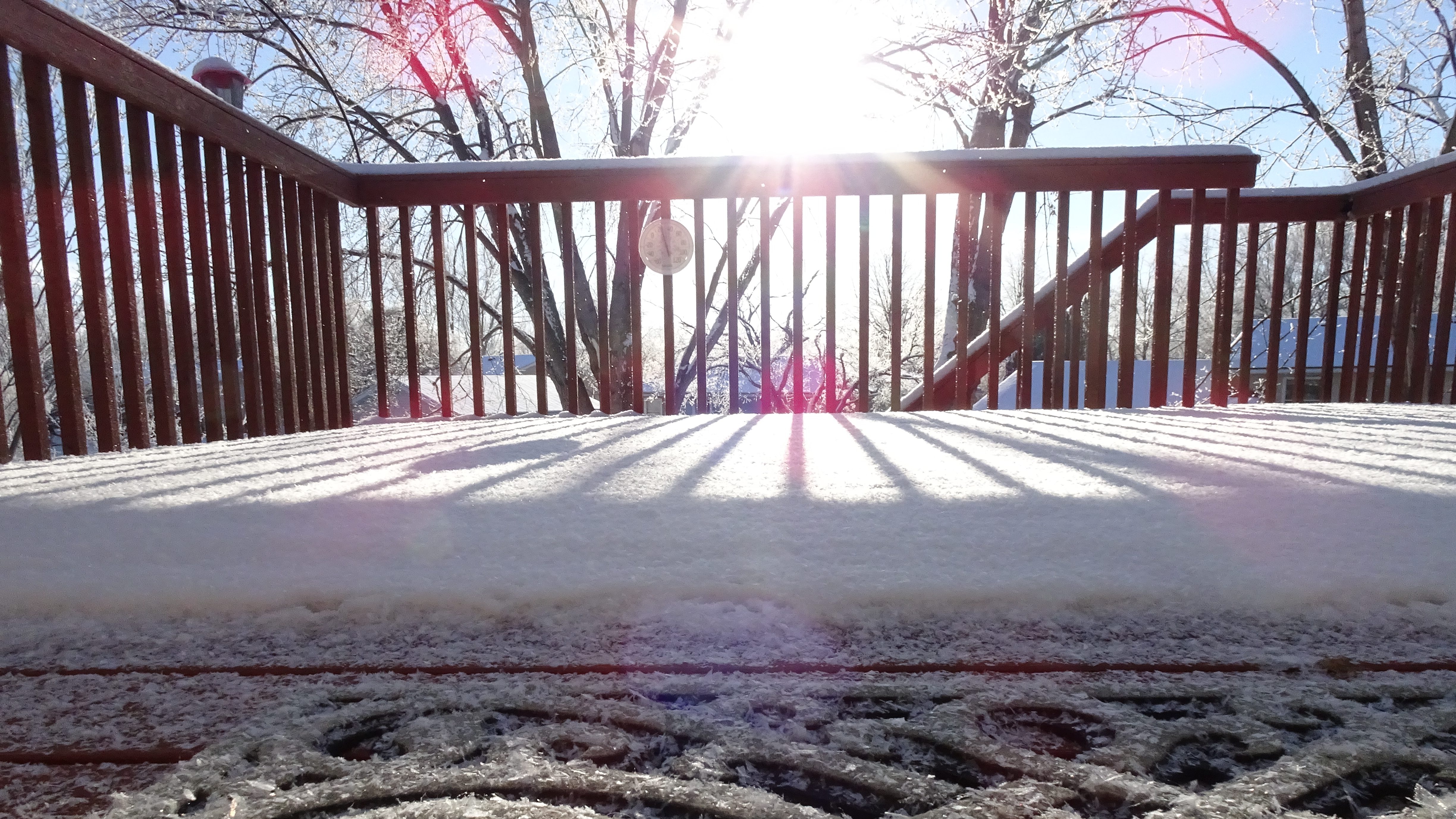
Here in the central plains a winter storm can mean “batten down the hatches, we’re in for it” or “nah, never mind…lots of wind, but no accumulation”. Often the weather forecast can’t even tell which it will be until the winter storm makes itself clear. Polar freeze? Or just a little blowy snow?

Photo: Amanda Stiver

This is a great time to take stock of what to do when you’re waiting for potentially nasty winter weather. In this age of digital weather apps we have heavy duty forewarning. A blessing compared to the days when folks had to gather weather data based on observation and maybe a thermometer or, if lucky, a barometer. Those predictions were sometimes surprisingly accurate, but radar makes it much easier for us. Sometimes too easy.

With an accurate weather forecast we can justify waiting till the last minute to stock up and prepare as compared to our ancestors who had to prepare all summer for the winter, no matter what the weather was going to be. This is a blessing and a curse. Do we procrastinate and become naïve about how well technology will function in extreme weather? Forewarned is forearmed, but we still have to do our part or forewarning just becomes foreboding.

Now to practical matters. What to do if a winter storm is bearing down on you?

Photo: Amanda Stiver
  1. Take stock. What’s in your fridge? In your freezer? Pantry? Do you have enough basics and a baseline supply of fresh foods to get you through a few days if the roads are impassable or, worst case, if the electricity goes out and you can’t cook in the way you normally do? Do you have adequate sources of protein and carbohydrates? These are the building blocks of heat in the body? Do you have a good supply of drinking water, if the pipes freeze?
  2. Check your heat and light sources. Do you have back-up? Either a generator, or kerosene oil heater, wood stove or other heating device? If so, do you have enough fuel, wood, oil, gas, propane or otherwise? A fuel-less heater isn’t much use. Also important, where will you heat food if the electricity goes out? A propane camp stove outside will do in a pinch, or even a gas barbecue, although you need to bundle up! (Don’t try to use either of these cookers in a house or under a roof!!) Do you have oil lamps, lanterns or LED light sources with adequate batteries or fuel to keep them lit? Also, check your stock of warm clothes and blankets. If you are without heat for a little while, bundle up to preserve warmth!
  3. Do you have a reasonable supply of essential nutritional supplements or medications? This is often an afterthought, so keep a running stock in the cupboard! We’re natural health types, so having the proper nutritional supplements, at least a month’s worth, is essential for some of our health needs. We order in advance because in our part of the central plains you can’t just pop into the local health food store (there isn’t one).
  4. Build a menu, add some fun and seize the adventure! When checking your supplies, take time to jot down a good pre-planned menu for emergencies and then be sure to have the components on hand. This takes the stress off, but it can also make lemonade out of lemons. Aside from simple dishes and maybe some soup mix, be sure to include hot cocoa and marshmallows. Or, if baking is your thing, have the proper supplies for a yummy gingerbread or cinnamon rolls. Then check your board games and other fun items. A movie night is great, but if the power is sketchy, board games or cards by candlelight can be an out-of-the-ordinary diversion. Maybe spend some time imagining what it was like for your forebearers who didn’t have electricity until the last century (that’s everyone). Life was very different, and required a lot of planning ahead. Family stories about the challenges and adventures of that time are a good thing to store up for events like these, just ask grand or great-grand parents! Shared trials can be, ironically, a good way to connect with family and others!
  5. Finally, schedule a trial run, check supplies and restock often! If you have heaters, lights, generators, and other devices that you have never used, take time (not during a storm) to test them, and learn how to use them safely and with ease! Below zero temperatures are not the time to be fiddling with a generator outside!

There are many other considerations when preparing for an approaching storm, and the list above is only a starting point. Here is a resource from the CDC that offers a winter storm preparation list for home and vehicle: https://www.cdc.gov/disasters/winter/beforestorm/preparehome.html

This resource from the American Red Cross has handy printouts to keep on file: https://www.redcross.org/get-help/how-to-prepare-for-emergencies/types-of-emergencies/winter-storm.html

Preparing ahead of time for challenges and difficulties is an essential quality of a prudent consumer. A day’s worth of preparation is a penny (or a life) saved in the long-run!

Keep a shiny penny and a positive thought!

Consumer Mindset

What Is a “Prudent Consumer”?

Photo: Amanda Stiver

Do you feel like you’re in the passenger seat when you go to the store, in person or online? Do groceries jump into your cart because you’re desperately out of time to shop and prepare a meal? Or because you or someone with you is extremely hungry, bordering on hangry? Or because the products you see on your Facebook feed or other social media seem like a good idea and it’s the most recent thing you could remember because, once again, you didn’t have much of a shopping list (or too much of a shopping list if you’re on Amazon)? Or worse, are you struggling with a limited budget and feeling hemmed in by prices and lack of ideas?

Good! Because now we know where to start. Wearing the shoes of every grumpy, frustrated, out of time, and over-budget frazzled shopper is the start of a prudent consumer. It just takes a little time and good advice to put the frazzled shopper down for a nap and give the prudent consumer time to shine.

Join us as we tackle the process, ours and yours, of being a prudent consumer in an age of economic volatility, over-invasive digital marketing, and a vacancy in the “old-time common sense” department. We aren’t facing anything that hasn’t been faced in the past, the window-dressing may be different, but the basic human frustrations aren’t.

Our parents and great-grandparents (mom and daughter duo here) were hit head-on by the Great Depression of the 1930’s followed quickly by World War Two rations and privations, but they soldiered on because of a solid education in consumer prudence and an abhorrence of waste. We live in an age that seems consumed by two things, a need for constant material increase (stuff, we call it) and yet a looming fear that they are grossly polluting the planet. Without getting into the economics and ecology debate, developing a strong disgust for “wastefulness” is a good foundation point for being a prudent, rather than a flippant or wasteful consumer.

With a pocketful of “prudent consumer” tools you can win the battle of the dwindling wallet and be in control and content with what you need rather than being manipulated by your wants or whims! Join us on this adventure, and share your own prudent consumer tips in the comments as we go along. Together we’ll build a team of prudent consumers who can share their skills and help others along the same path toward a more stable financial future.

Keep a shiny penny and a positive thought!